How Data-Driven Market Research is Shaping the Future of Luxury and Fashion
In an industry traditionally driven by instinct and heritage, luxury and fashion brands are increasingly turning to data-backed insights to stay ahead. This article explores how Euromonitor's Passport—an award-winning knowledge hub used by over 60,000 decision-makers—enables forward-thinking strategies. From identifying emerging trends to optimizing supply chains, we uncover the hidden economic logic that makes market research the new cornerstone of competitive advantage in luxury. Dive into the patterns, policies, and innovations reshaping global business implications for the high-end sector.
Ahmed Al-Farsi
Editorial Analyst
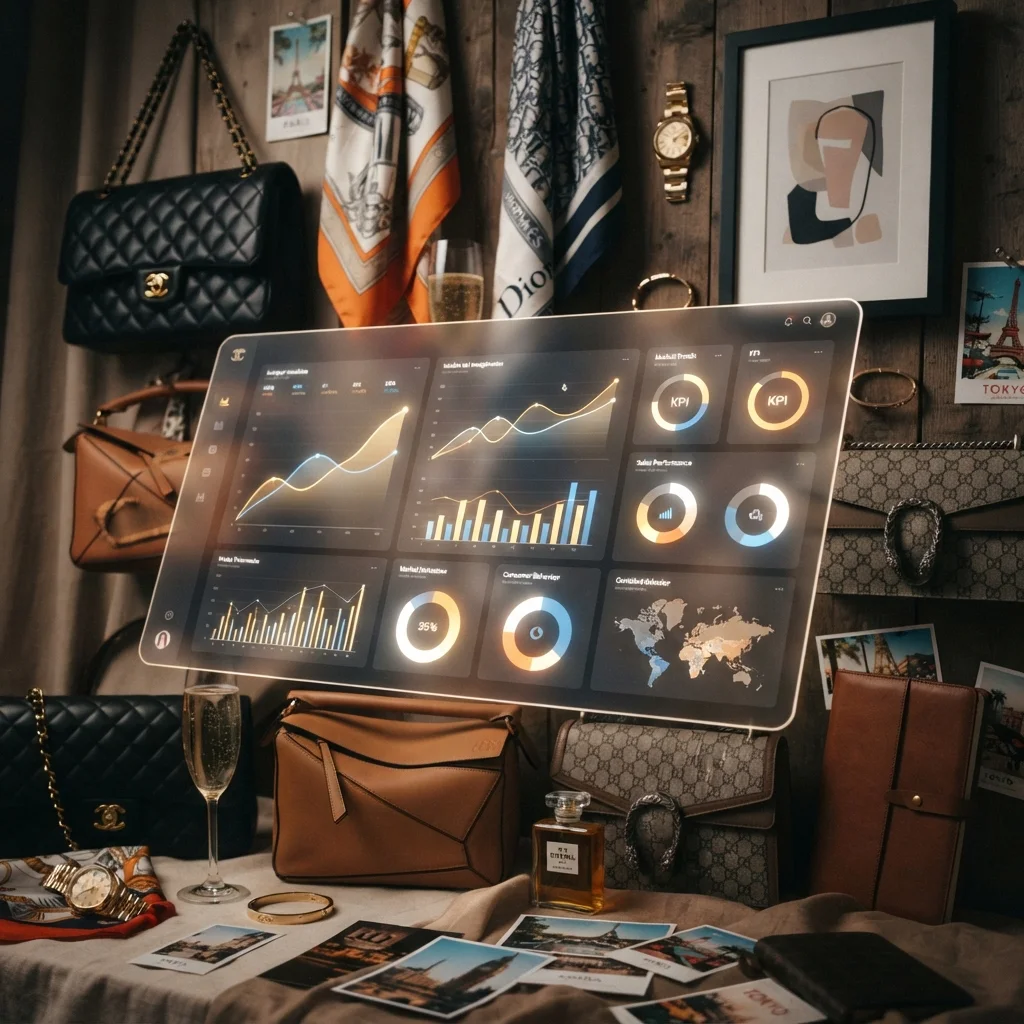
How Data-Driven Market Research is Reshaping the Luxury and Fashion Industry
Introduction: The Intuition vs. Data Tension in Luxury
For decades, the luxury and fashion industry operated on a foundation of creative instinct, brand heritage, and the singular vision of a handful of designers. Decisions about which colors would dominate next season, which materials would command premium prices, and which markets deserved flagship stores were often made in closed studios, guided by gut feelings and decades of accumulated taste.
That model is under strain. Consumer expectations are fragmentating; supply chains have grown in complexity; and the cost of a wrong bet—a collection that misses the cultural moment, an over-investment in a fading geography, a sustainability misstep—has never been higher. Today, a growing number of commercial decision-makers, from brand strategists to product-development leads, are turning to data-driven market research to reduce uncertainty. Platforms like Euromonitor's Passport, Statista, and McKinsey's ConsumerWise are now cited in boardrooms alongside mood boards and trend reports.
Yet the rise of data in luxury is not without friction. Critics argue that over-reliance on quantitative insights risks flattening the very artistry that defines high-end brands. This article examines both sides: how data is rewriting the rules of luxury market strategy, and where it falls short. We explore the hidden economic logic, the emerging tools, and the trade-offs that brands face as they navigate this new terrain.
[IMAGE: A split composition: on the left, a designer's hand sketching a garment silhouette on paper; on the right, a close-up of a tablet screen displaying a data dashboard with trend lines and consumer sentiment scores, with blurred luxury product images in the background.]
The Scale of Adoption: What the Numbers Reveal
One of the most frequently cited figures in recent industry discussions is the user base of Euromonitor Passport—reportedly over 60,000 global decision-makers across sectors including luxury goods, apparel, cosmetics, and hospitality. While this number speaks to the platform’s reach, it is worth interrogating what it actually means.
A large user base does not inherently validate a platform's accuracy or uniqueness. Market research tools are purchased by companies for a variety of reasons: benchmarking against competitors, fulfilling compliance requirements, or simply because subscription deals are bundled with broader consulting engagements. Moreover, many luxury houses run proprietary consumer-insight units that complement—or even bypass—third-party platforms.
Nevertheless, the scale of adoption signals a structural shift. Even heritage brands like Chanel and Hermès, historically protective of their mystique, now maintain dedicated market intelligence teams. Research from Bain & Company and Altagamma shows that the personal luxury goods market grew to an estimated €362 billion in 2023, with data-driven decisions playing a larger role in areas like pricing, inventory allocation, and regional expansion. The question is not whether data is being used, but how effectively and with what blind spots.
[IMAGE: Infographic showing a timeline from 2015 to 2025, with bars representing the percentage of luxury brands reporting use of external market research platforms. The bars rise from roughly 40% in 2015 to over 70% in 2025, with a dotted line labeled "adoption threshold."]
Uncovering Emerging Trends: Precision vs. Nuance
Data platforms promise to identify emerging trends with a speed and granularity that traditional forecasting cannot match. By aggregating transaction data, social media sentiment, search volume, and consumer surveys, they can flag micro-trends—such as the rise of "quiet luxury" in 2022–2023, or the acceleration of second-hand luxury purchasing among Gen Z—before they appear in editorials.
For example, analysis of spending patterns in key cities like Paris, Milan, New York, and Shanghai reveals that the "understated wealth" aesthetic was detectable in the data as early as mid-2021, when search interest for terms like "minimalist luxury" and "stealth wealth" began climbing in North America and Western Europe—months before the phenomenon became a media narrative. Brands like The Row and Loro Piana saw disproportionate sales growth in categories like unmarked cashmere outerwear and leather goods without logos, a shift that data platforms helped quantify.
However, there are important caveats. Trend detection based on historical data can be backward-looking; it captures what has already started gaining traction, not what is genuinely new. Many of the most transformative shifts in luxury—the rise of streetwear, the blurring of gender lines in fashion—were initially dismissed or missed by quantitative models because they emerged from subcultures with low digital footprints. Algorithmic trend-spotting risks reinforcing the mainstream while sidelining the marginal.
Moreover, data platforms vary widely in methodology. Some rely heavily on survey panels that skew toward certain demographics; others use web-scraping of e-commerce sites that may not capture offline purchases (still a majority in luxury). Brands using these tools must continuously calibrate for bias.
[IMAGE: A world map rendered as a heatmap, with brighter colors indicating higher concentrations of luxury spending density. Trend lines arc from major fashion capitals—Paris, Milan, New York, Shanghai—toward emerging markets like Mumbai, Dubai, and Seoul.]
From Supply Chain to Consumer Sentiment: The Hidden Economic Logic
One of the most concrete applications of data-driven research in luxury is supply chain optimization. Excess inventory—often burned or heavily discounted at the end of a season—has long been a drain on margins and a reputational risk. In 2022, Burberry publicly stated it would stop destroying unsold products after a backlash, while Richemont wrote down €2.2 billion in excess watch inventory in 2023. Data can help synchronize production with demand signals more precisely.
Platforms like Passport provide macro-economic indicators (GDP growth, inflation, consumer confidence indices) that allow brands to model demand across regions weeks or months before committing to production runs. When combined with real-time sell-through data from retail partners, this creates a feedback loop that reduces overstock. A case in point: during the 2023 slowdown in Chinese luxury spending—attributed to property market troubles and youth unemployment—brands that had early access to consumer sentiment data were able to adjust their inventory allocation to Southeast Asia and the Middle East faster than those relying on legacy forecasting.
Beyond supply chain, data tools also help brands navigate regulatory complexity. The European Union's Corporate Sustainability Reporting Directive (CSRD) and the proposed Digital Product Passport for textiles require luxury companies to track raw material origins, carbon footprints, and circularity metrics. Market research platforms that integrate policy tracking and compliance modeling are becoming essential for strategy teams.
Yet the reliance on aggregated data for such decisions carries risks. Macro-level consumer sentiment indices, for instance, may not capture the distinct behavior of luxury shoppers, who are often less sensitive to economic downturns than mass-market consumers. In 2023, despite global economic headwinds, the luxury sector grew 8–10% in constant currencies, according to Bain—suggesting that broad economic signals need to be overlaid with category-specific granularity.
[IMAGE: A flowchart showing the data-to-decision pipeline: from raw data sources (point-of-sale, social listening, surveys) through analysis (trend detection, sentiment scoring, demand forecasting) to business actions (assortment planning, pricing, sustainability compliance). Each step has a small warning icon noting potential bias or latency.]
The Counterargument: When Data Falls Short
A balanced assessment must acknowledge the limitations and unintended consequences of data-driven market research in luxury.
First, data can erode differentiation. If every brand uses the same platforms subscribing to the same trend reports, there is a risk of homogenization—what some analysts call "algorithmic luxury." The very exclusivity that commands premium prices depends on surprise and nonconformity. When competitor brands all launch the same "quiet luxury" capsule collection based on the same consumer insight, the trend becomes noise.
Second, quantitative data rarely captures emotion, desire, or cultural resonance. Luxury is not simply a product category; it is a psychological construct built on aspiration, scarcity, and storytelling. The emotional value of a handbag designed by a visionary creative director is poorly measured by consumer satisfaction scores or search-volume data. Brands that over-index on metrics may under-invest in the very intangible qualities that differentiate them.
Third, data quality remains uneven. Many platforms rely on self-reported consumer surveys, which are prone to social desirability bias (consumers claiming they care about sustainability more than they actually do) and recency bias. Transaction data from third-party marketplaces may not represent the entire buying journey, especially in luxury where purchases are often made in-store, through personal shoppers, or via waitlists.
Fourth, there is a risk of confirmation bias. Decision-makers may use data to justify existing hunches rather than challenge them. A brand manager convinced that her company needs to focus on Gen Z may selectively interpret data that points to that demographic, ignoring signals that older, wealthier cohorts still drive the majority of spending.
Finally, the cost of access to high-quality data platforms can be prohibitive for smaller luxury players, creating an information asymmetry that favors large conglomerates like LVMH and Kering, which already have in-house analytics capabilities.
[IMAGE: A stylized illustration showing two luxury boutiques side by side: one uses only data-driven insights (sterile, identical mannequins), the other balances data with artistry (unique, expressive displays). A caption reads: "Where does the balance lie?"]
Balancing Art and Science: What the Industry Needs Next
The most forward-thinking luxury brands are moving toward a hybrid model that combines data-driven efficiency with creative autonomy. Rather than treating market research as a prescriptive tool, they use it as a contextual sensor—providing signals without dictating decisions.
For instance, creative directors may review consumer sentiment data not to decide what to design, but to understand which customer segments are most receptive to a particular aesthetic direction, and where to allocate marketing budgets. The product itself remains driven by intuition and craft; data refines the go-to-market strategy.
Moreover, the next generation of market research tools is beginning to address some of the limitations above. Natural language processing (NLP) can now analyze unstructured data—Instagram comments, Reddit threads, runway show reviews—to capture cultural nuance that traditional surveys miss. Some platforms are experimenting with predictive models that simulate alternative futures, helping brands stress-test their strategies against different economic or social scenarios.
At the same time, there is growing demand for transparency in how data is collected, weighted, and interpreted. Industry bodies like the Fashion Pact and the Sustainable Apparel Coalition are pushing for standardized metrics, which would reduce the cherry-picking of favorable data points.
For luxury brands, the path forward is not about replacing intuition with algorithms, but about building a robust decision-making framework that respects both. Market research becomes the guardrails on a winding road—preventing catastrophic errors without smoothing out all the interesting curves.
[IMAGE: A split-screen photo: top half shows a mood board with fabric swatches and sketches; bottom half shows a dashboard with sustainability compliance data and regional demand forecasts. The two are connected by a flowing line labeled "informed intuition."]
Conclusion: A New Cornerstone, But Not the Only One
Data-driven market research has undeniably become a cornerstone of strategy in luxury and fashion. It enables faster identification of emerging trends, more efficient supply chains, and better pricing and distribution decisions. Platforms like Euromonitor Passport, alongside others, have earned their place in the industry's toolkit by providing scale, consistency, and breadth of coverage that individual brands cannot replicate internally.
Yet the industry's enduring success will depend on remembering what data cannot measure. The magic of luxury lies in the unexpected, the aspirational, and the unquantifiable. The brands that thrive in the coming decade will be those that use data as a lens, not a straitjacket—leveraging evidence to reduce waste and risk, while leaving ample room for the creative leaps that define the sector at its best.
The economic logic is clear: data reduces uncertainty. But uncertainty, in the right measure, is what makes luxury luxury.
[IMAGE: A minimalist photograph of a single high-end watch on a marble surface, reflected softly, with a faint grid of data points overlaying the background—representing the intersection of precision craftsmanship and analytical insight.]
Keywords

Ahmed Al-Farsi
Luxury & Lifestyle Editor with expertise in high-end hospitality and retail.